The Quiet Growing Time: What Charlotte Mason Believed About Educating Children Before Six: Part 1: The History of the Nursery
Charlotte Mason had a lot to say about the education of children. She wrote six volumes, founded a national educational union, and trained governesses for decades. But embedded within her vast body of work is a question that parents still wrestle with today: what on earth do we do with children before formal schooling begins?
Her answer was both simple and countercultural: protect their childhood. Give them time to grow. Get them outside. Fill their days with beauty, occupation, and love…and do not rush a single thing.
“In this time of extraordinary pressure, educational and social, perhaps a mother’s first duty to her children is to secure for them a quiet growing time, a full six years of passive receptive life, the waking part of it for the most part out in the fresh air.”
These words of conviction grounded in Mason’s principles and beliefs of education and personhood were radical back then and they continue to influence her philosophy today. But the question is still asked, what is a mom to do in the age of preschool, play groups, and early achievements? And is there room for preschool in a Charlotte Mason philosophy?
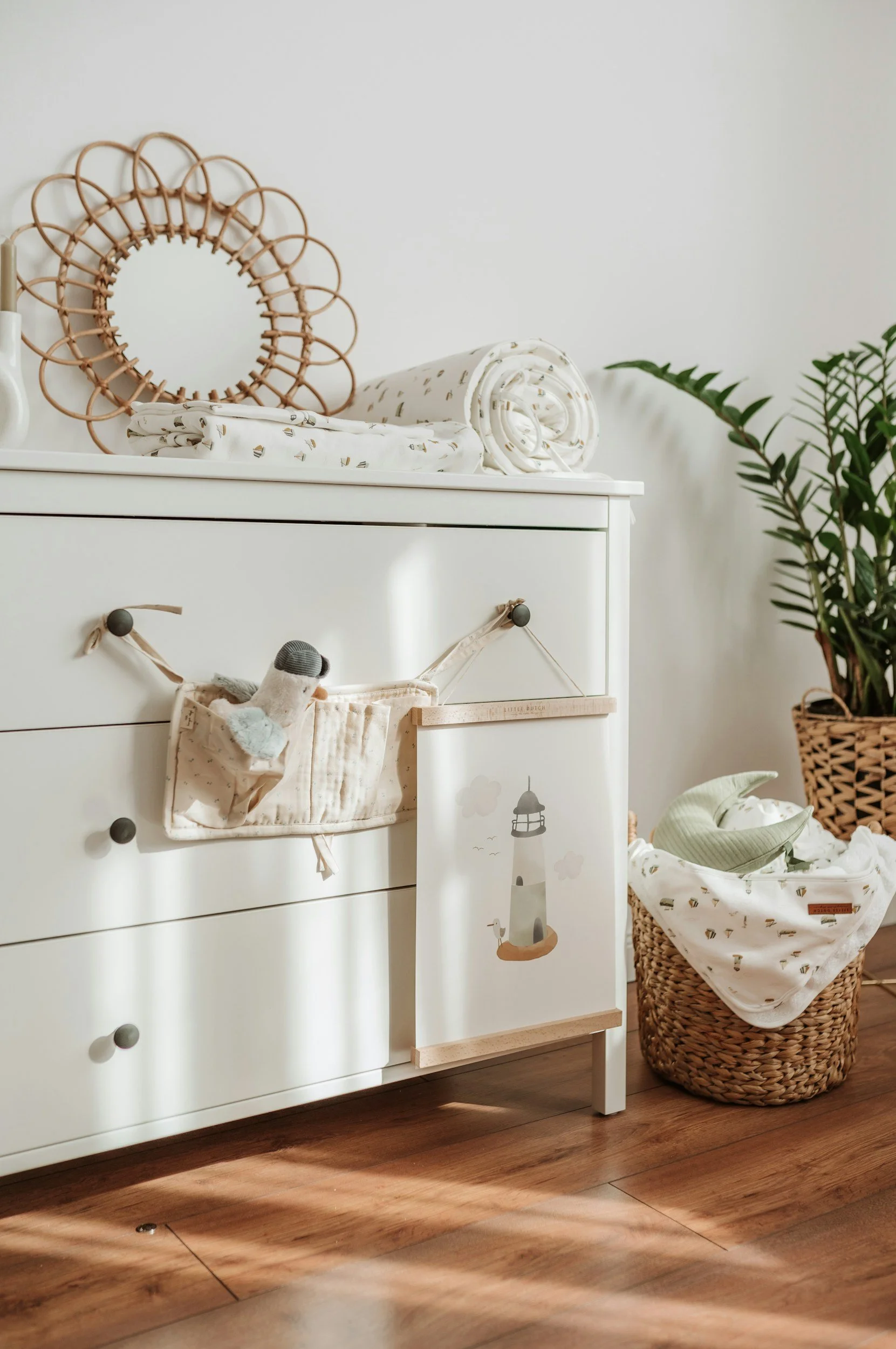
A victorian era nursery would be very different than what we imagine today- a room for an infant.
Historical Context: What the Victorian Nursery Looked Like
To understand Mason's vision of early childhood, it helps to consider the world in which she lived. In late Victorian and Edwardian England, childhood among the middle and upper classes was largely organized around the nursery, a separate domestic space managed by a nurse or governess. The work did not rest solely on the mother. Children often spent less with their parents, and the education of young children was a contested space.
Two powerful forces were pushing on early childhood education at the time. Friedrich Froebel's kindergarten movement, imported from Germany, promoted structured activities and apparatus. (gifts, occupations, and organized games meant to develop the child in methodical ways.)
Meanwhile, Maria Montessori's work had arrived in English in 1912, offering a different but equally systematized vision of prepared environments and carefully sequenced materials.
Mason was familiar with both thinkers, referencing them in her writing, but ultimately disagreed with the degree of apparatus and external structure both systems required.
In 1917, Mason curated the landmark "Baby Number" of The Parents' Review. This entire journal issue dedicated to the education of children under six. However, printing was restricted by wartime conditions.
It is with all of these factors, Mason and her PNEU colleagues made a deliberate, public case for protecting the unhurried, sense-rich, nature-soaked childhood they believed was the birthright of every young person.
Mason's Core Conviction: A Person from the Very Beginning
The foundation of Mason's thinking about young children rests on a single, revolutionary idea: children are born persons. Not blank slates to be written upon, not clay to be molded, but full human beings with minds, wills, and inner lives from infancy onward.
In her own article for the 1917 "Baby Number," titled The Mind of a Child, Mason addressed this directly:
“From such considerations as these we may make guesses at truth and believe that an infant is a person with a mind of his own.”
This sounds obvious to modern ears, but it was a significant claim in an age when children were largely understood as incomplete adults requiring correction and formation rather than respect. For Mason, recognizing the child as a person meant that the nursery years were not a waiting room before education began, they were in fact education of sorts. One of the richest and most formative kinds of education.
She was equally clear, however, that this did not mean accelerating academic content. The child's mind, she explained, was "active, logical, in every way capable" however, but the brain was not yet ready for the sustained effort that formal lessons required. The answer was not to fill the gap with structured drills, but to fill it with something better: beauty, nature, story, music, and good habits cultivated gently over time.
Occupations, Not Lessons
One of the most important distinctions in Mason's early childhood philosophy is captured in a single word that was used deliberately: occupations. These occupations are not lessons, curriculum, or structured activities. Occupations are purposeful, freely chosen, unhurried engagements with the world.
In articles written on early childhood, particularly those written and revised by Elsie Kitching through the 1930s and 1940s, were emphatic on this distinction. Children who were pushed into academic work before six, Mason's circle warned, showed troubling signs later: a lack of vitality or a want of concentration, a restlessness and depletion that came from living, as Kitching put it, at too great a speed.
The PNEU received constant letters from mothers wishing to enroll children aged four and five in the Parents' Union School. The consistent answer was the same: let the child have his quiet growing time. He should still have occupations, but not lessons. Even the quicker child, the one who seems ready, needs the unhurried space of the nursery years.
What did these occupations look like in practice? Mason sketched a vivid picture in The Mind of a Child: watercolors and crayons, plasticine and clay, paper folding, puzzle maps, picture books, needle-crafts with big needles, a ball frame and dominoes for early counting, a box of letters learned by sound rather than name, dancing games, and skipping ropes. On fine days, the children were outside. Always, there was a sense of much freedom in both the manner and the matter of "What shall we do next?"
Nature in the Nursery: The Outdoor Life of Little Children
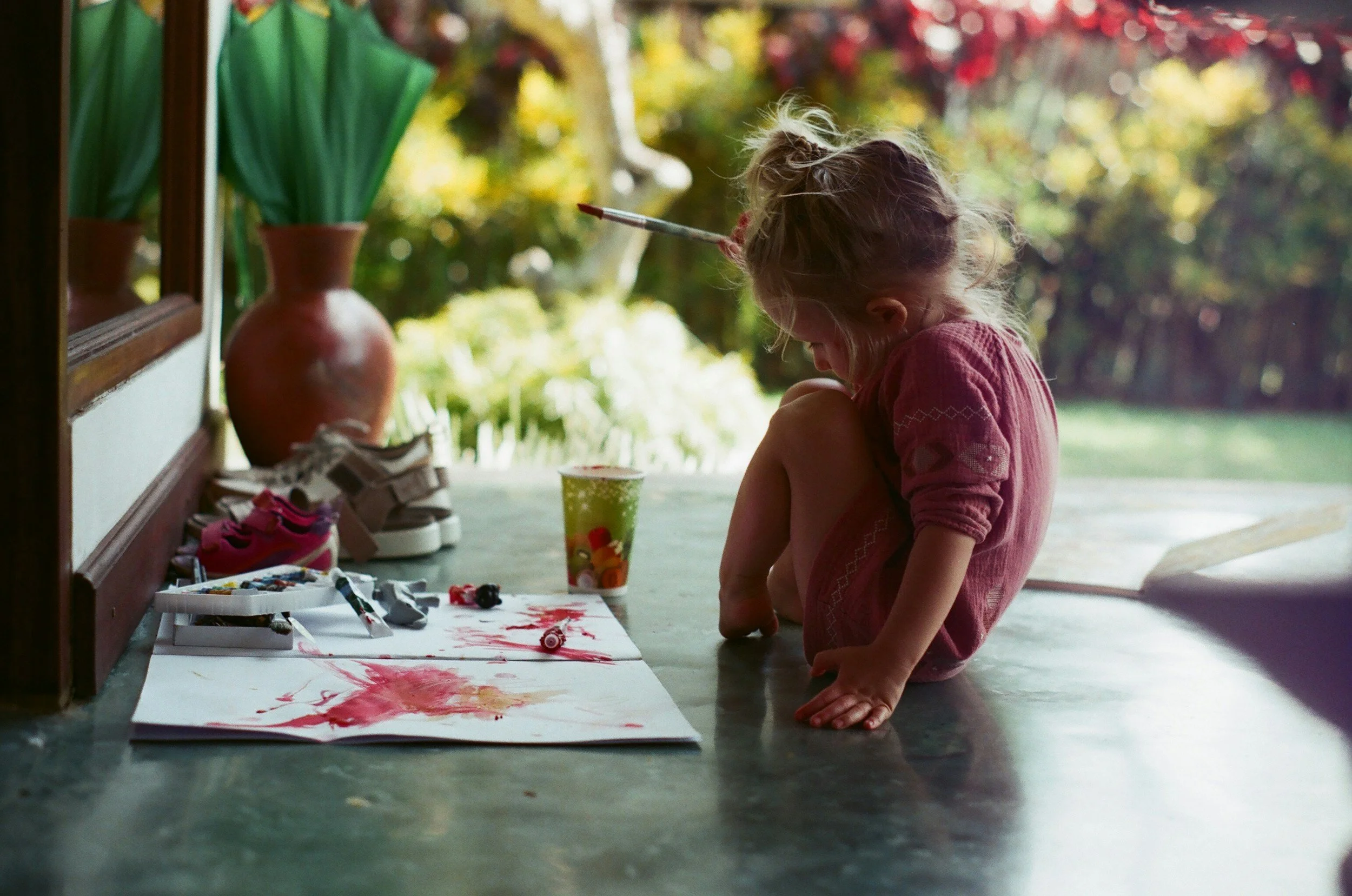
If there is one thread that runs through every PNEU article on the nursery years, it is this: children belong outdoors. Mason was insistent that the outdoor life was not a supplement to early education, it was early education. Fresh air, moving bodies, and direct encounters with the natural world were forming the child in ways no indoor activity could replicate.
Janet R. Smith, a trusted alumna of Mason's House of Education, contributed the article Nature in the Nurseryto the 1917 "Baby Number." So enduring was its wisdom that the PNEU reprinted it nearly forty years later, in 1956. Her vision was warmly practical: most of the time for nursery children, she noted, is already spent outdoors, and so learning the names of flowers, watching insects, noticing the changes of season, and befriending the natural world is simply the most natural thing in that child's day.
“Surely, a nursery in which Mother Nature is a stranger or nearly so must be a miserable place!”
Smith encouraged mothers to teach flower names as children brought bouquets in from the garden, to share legends and stories about plants, and to understand that this kind of gentle attentiveness, naming, noticing, wondering , was building something that would last a lifetime. It was not information transfer. It was the formation of a child who would walk through the world with eyes wide open.
The Arts Begin in the Nursery
One of the most striking aspects of the 1917 "Baby Number" is how seriously the PNEU treated the arts for children not yet five years old. This was not a concession to entertainment , it was a philosophical conviction that beauty forms the soul in ways that propositional learning cannot.
Mrs. Howard Glover, the founder of Music Appreciation within the PNEU, wrote Music in the Nursery from firsthand experience — her son Cedric could sing before he could speak, having been raised in an atmosphere of classical music from infancy. Her conviction was that a musical ear trained from the very beginning was not a luxury but an endowment, one of the most inspiring joys of life. She encouraged mothers to play Bach and Beethoven, to name every piece and composer, to play the same music until it became a beloved friend, and to welcome the small child onto one's lap at the piano to feel the music as much as hear it.
“Music should take its place in the nursery side by side with those other new impressions which exercise and expand the growing mind.
”
Books & Story
Mrs. V. M. Hood's article Reading in the Nursery made the case that literature, art, and music could all begin in the nursery years, and that the impressions made in early childhood were woven permanently into the growing brain. She drew on the ancient Jesuits' conviction that early impressions are never fully effaced, and on a deep reverence for beauty: the little flannel books given to a baby should be the best available, with genuine illustrations of good design and pure color. She recommended Robert Louis Stevenson's A Child's Garden of Verses as essential, along with the Bible told in Bible language, Walter de la Mare's poetry, and classic stories of goodness and truth.
Crucially, Hood (and Mason herself )cautioned against too many books. The goal was quality, not quantity: a few beloved books, read and re-read, dwelt upon.
Nursery Games
Lady Hankey, contributing the article on children's games, made an observation that feels almost modern in its insight: the word "games" was not quite right for what young children did. Occupations may be the better word. This is because children at play were engaged in something serious. The building of a bridge from blocks the folding of paper boats, the sewing of small things, the imaginary worlds constructed with a few simple materials. None of these were wastes of time before real learning began. They were the very substance of learning for a child under six.
Habits: The Hidden Architecture of the Early Years
For all Mason's emphasis on freedom and outdoor life, she was equally insistent on one thing that parents of young children sometimes overlook: the critical importance of habit formation in the nursery years. And she believed that the younger the child, the more plastic and teachable the brain.
Helen Wix, speaking on behalf of the PNEU at the 1919 Conference of Educational Associations, put it plainly: every nurse knows that the smoothness and happiness of a baby's life depends on habits, well and duly formed, until they become as natural as breathing. The habits of order, of kindness, of attention, of obedience. These were not constraints on childhood but the very foundations of character and freedom. Mason herself believed that habits formed in childhood were the greatest gift parents could give.
The atmosphere of the home, its order, its peace, its tone, was itself a kind of teaching. A child reared in a household where the adults also lived under a sense of law, where "I will" was servant to "I must," was quietly learning the most important lesson of all: that life has a shape, and that shape is good.
In our next post, we’ll dive further into Part 2:A Victorian Idea of Education in a Modern World and What it Means for Families Today