How I Use My School Nest Planner to Run Our Homeschool
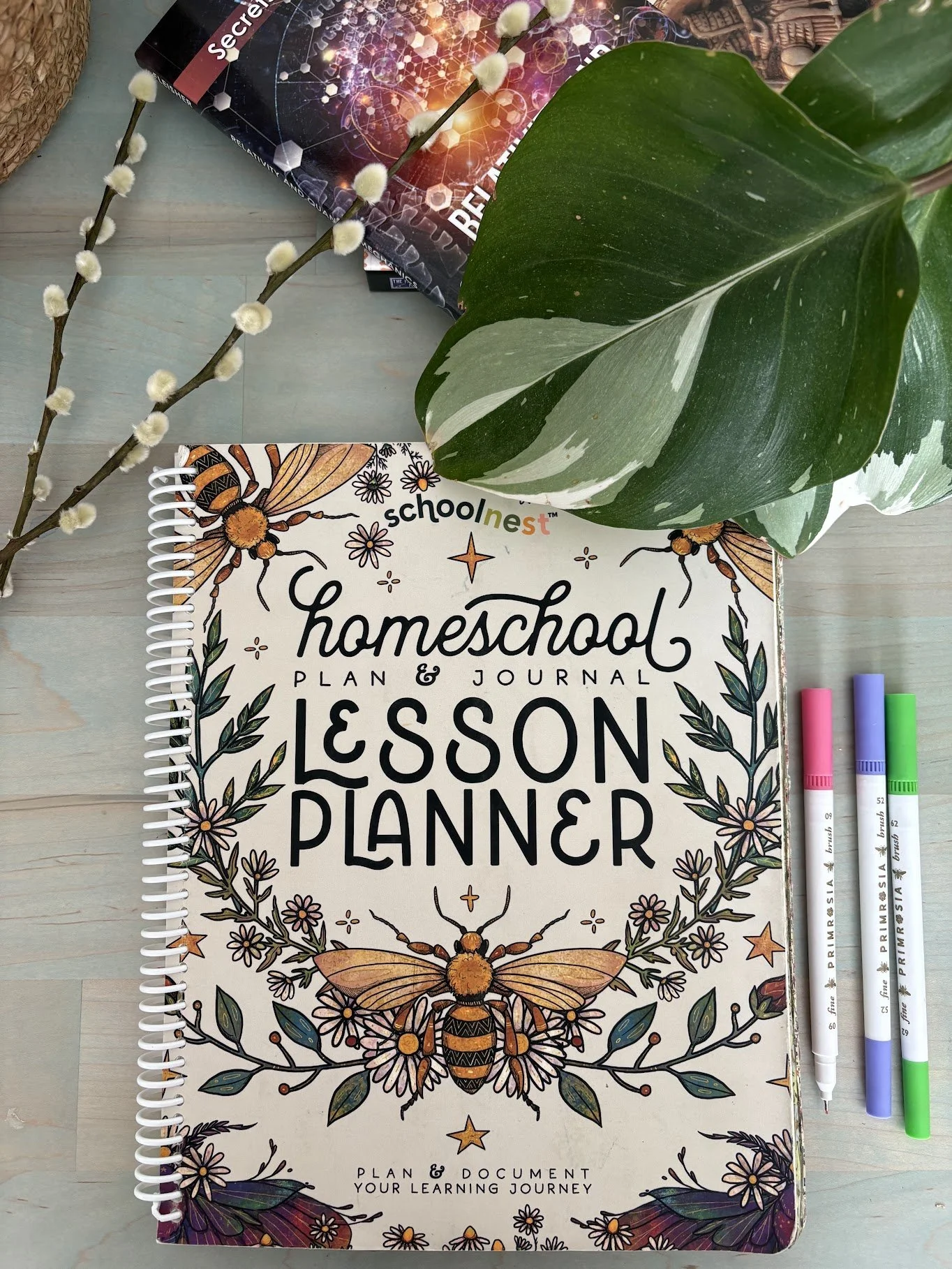
If you've ever tried to wrangle a Charlotte Mason homeschool into some kind of organized system, you know the challenge. There are living books, nature journals, recitations, narrations, co-ops, enrichment days, and the wild unpredictability of life with children. The first year I homeschooled I tried 3 different planners… and then came along Schoolnest.
Here's a real look at how I use mine, section by section.
The Vision Board
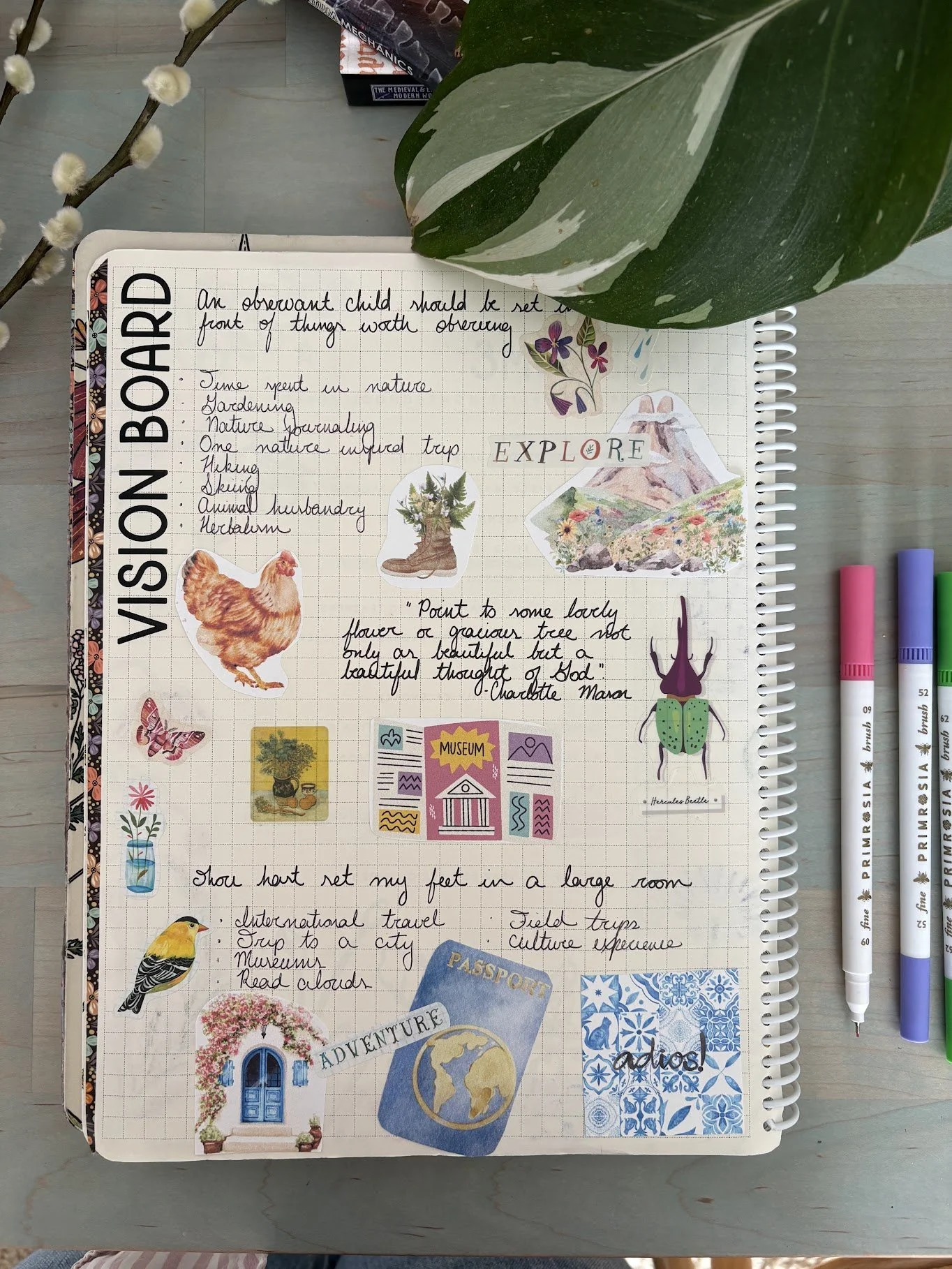
This year before a single lesson was planned, I worked on the Vision Board pages. This was one of my favorite things about the School Nest Planner, getting to dream first. Mine is filled with stickers, handwritten goals, and the ideas that are anchoring ideas that shape our whole year.
“An observant child should be set in front of things worth observing.”
Under that guiding thought, I've listed what I want our nature year to look like: time spent outdoors, gardening, nature journaling, a nature-inspired trip, hiking, skiing, animal husbandry, and an herbarium.
A second Charlotte Mason quote anchors the bottom half of this particular page "Thou hast set my feet in a large room" alongside goals for broadening our world: international travel, museum visits, field trips, reading aloud, and cultural experiences.
My vision board is how I want the year to feel when it’s over, not goals to accomplish. When the weeks get hard or the plans fall apart, I come back to this page and remember why we're doing this.
The Attendance Grid:
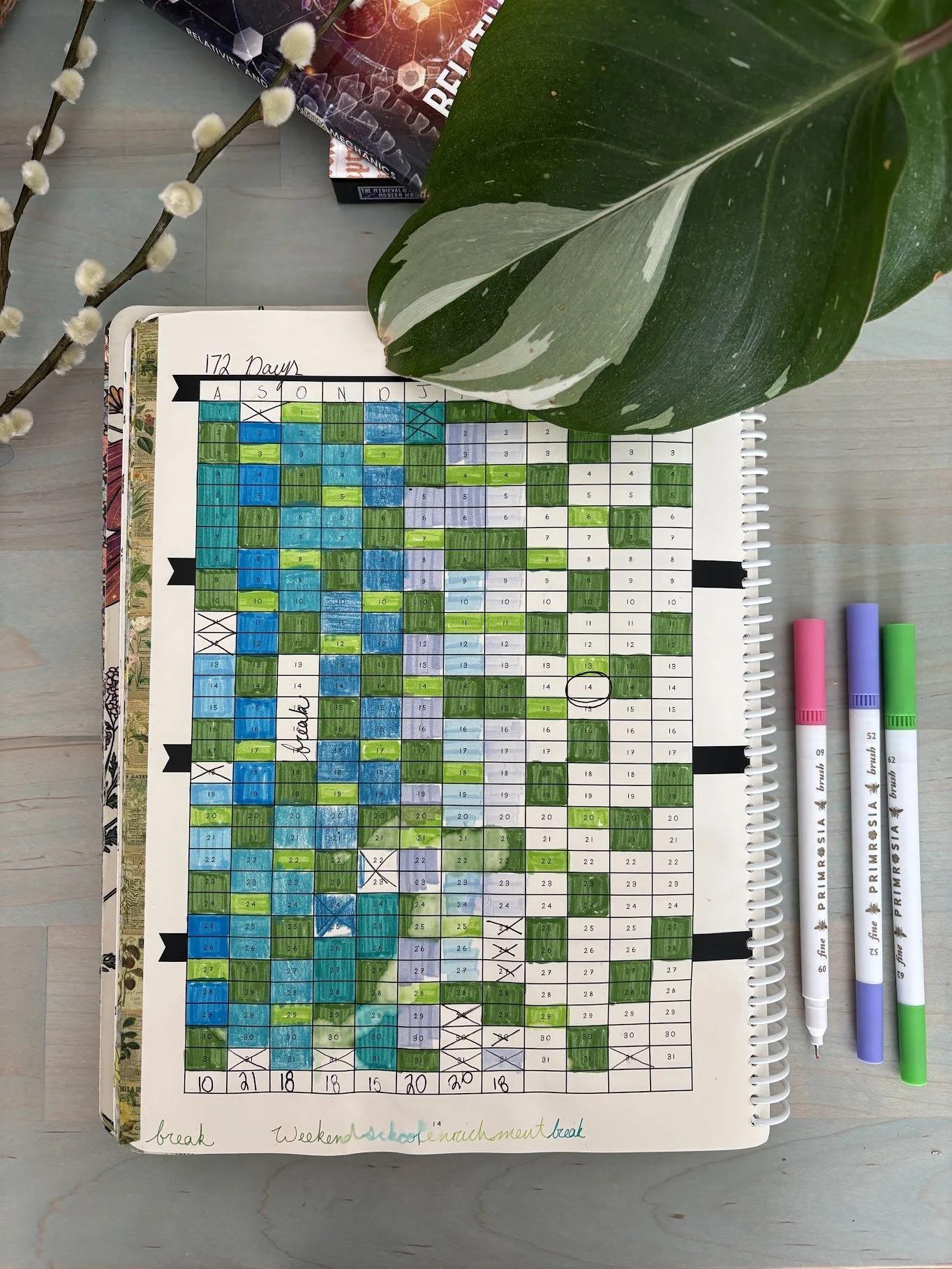
My state requires 172 school days, and the attendance grid is how I prove we've met that requirement. The planner includes a full-year grid spanning every month from August through May (A, S, O, N, D, J...), and I color-code each day as we go. Admittedly, I fell off the color coding…but alas, it’s still pretty.
I use a set of Primrosia brush markers to fill in the squares. Days off for breaks are marked with an X, and a legend at the bottom of the grid shows the breakdown: breaks, weekends, school days, enrichment days. At a glance I can see exactly where we are in the year and whether we're on pace.
There's something deeply satisfying about watching those colorful squares fill in across the months. By spring, the whole grid looks like a little mosaic of our year. It doubles as a legal attendance record I can show anyone who asks.
The Weekly Planning Pages:
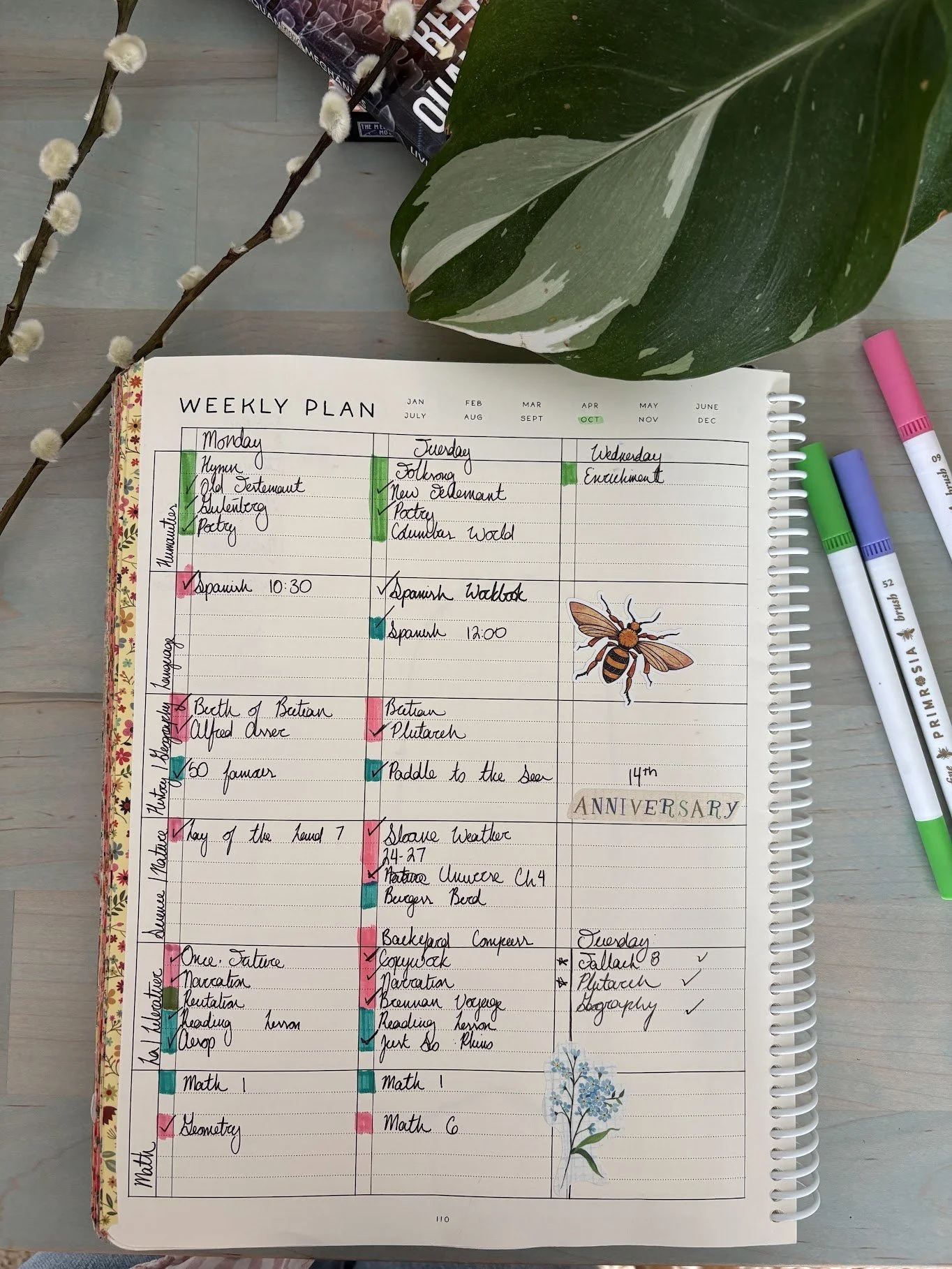
This is the heart of the planner for me. Each Weekly Plan page is laid out with a column for each school day and rows organized by subject area — which maps beautifully to the way Charlotte Mason education is actually structured.
I write assignments into each cell before the week begins, using colored highlighters on the margin tabs to visually separate subject blocks based on what each child is learning. As we complete each item, I check it off. Anything that rolls over gets a small arrow to the next day.
The planner also shows a month indicator at the top of each Weekly Plan page, so I always know exactly where we are in the term. And there's space to note personal events and I used the extra day for planning out The Charlotte Mason Home.
Weekly Overview and Reflection: Out of respect for my children’s privacy, I won’t share these pages.
Alongside the detailed Weekly Plan, the planner includes a Weekly Overview spread . This is a wider-angle view of the week that I use for scheduling, reflection, and all the things that don't fit neatly into subject rows. These are things like read alouds and handicraft ideas.
The top half is a schedule grid with columns for Monday through Sunday where I track appointments, activities, and commitments. This is where I note things like ballet, co-op, hockey, and church. All of the rhythms that frame our school week.
The bottom half is where things get really personal. I use this space for written reflection and narration, essentially journaling about our week as a school. I write about what we noticed, what sparked wonder, what was hard. I paste in a photo from our week, press a leaf we found on a nature walk, and add artwork cards from our picture study. The free grid pages invite exactly this kind of living-book, Charlotte Mason scrapbook energy.
There's also a small tracker in the corner for logging completed subjects across the week: Nature Journal, Written Narration, Drawn Narration, Recitation, and Timeline. It's a quick visual check that we're hitting the CM essentials.
Why this works for Us:
The School Nest Planner works for our homeschool because it holds space for every layer of what we do and all the aspects that go into homeschooling. The legal record, the lesson plan, the living book rhythm, and the soul of why we educate at home in the first place. It also allows me to customize it in a way that is manageable and obtainable.
Having the vision board on the same spine as the attendance grid matters. It means the why is always a few page-flips from the what. And when I'm tired in February and wondering if we're doing enough, I can open to those colorful attendance squares and see: yes. We are. Look at all those days.
Whether you're new to Charlotte Mason or have been at it for years, a planner that honors both the beauty and the business of homeschooling makes all the difference. The School Nest Planner has become one of my most treasured tools and faithful companion to my homeschool days.