Books of Poetry for Mothers Who Think They Hate Poetry
Most of us encountered poetry the way we encountered dissected frogs in biology class: as something inert, pinned open, and explained to death. We were handed poems and then handed the questions that went with them, and by the time we had parsed every metaphor and identified the meter and written a paragraph about what the speaker "really means," we had learned one thing with great efficiency: poetry is difficult, and difficulty is joyless, and therefore poetry is joyless.
Charlotte Mason would have grieved over this. She would not have been surprised, but she would have grieved.
For Mason, poetry was not only a subject to be studied. It was a form of nourishment, as necessary to the soul's formation as living books were to the intellect, as nature study was to the affections, as music was to the ear's education. She believed that children and mothers alike are nourished by contact with beauty, and that poetry, read aloud and received without analysis, does something to us that no amount of comprehension-question-answering can replicate. It forms us. It stretches the inner ear. It gives language for things we knew but could not say.
In her volumes of the Home Education series, Mason wrote about the atmosphere of the home as something cultivated rather than imposed, and poetry is one of the primary instruments of that cultivation. When a mother reads Keats aloud over tea, or murmurs a Hopkins line while she washes dishes, or returns to the same Rossetti poem every autumn because it fits the season like a key in a lock, she is doing something formative. Not for her children only. For herself.
This is the invitation that tends to get lost in Charlotte Mason circles, where the mother's education is often framed primarily in terms of service to her children's learning. But Mason was quite clear that the mother herself is a person in formation, deserving of the same living, nourishing education she is offering her household. Poetry belongs in her own life, for her own sake, because she too has a mind and soul that require feeding.
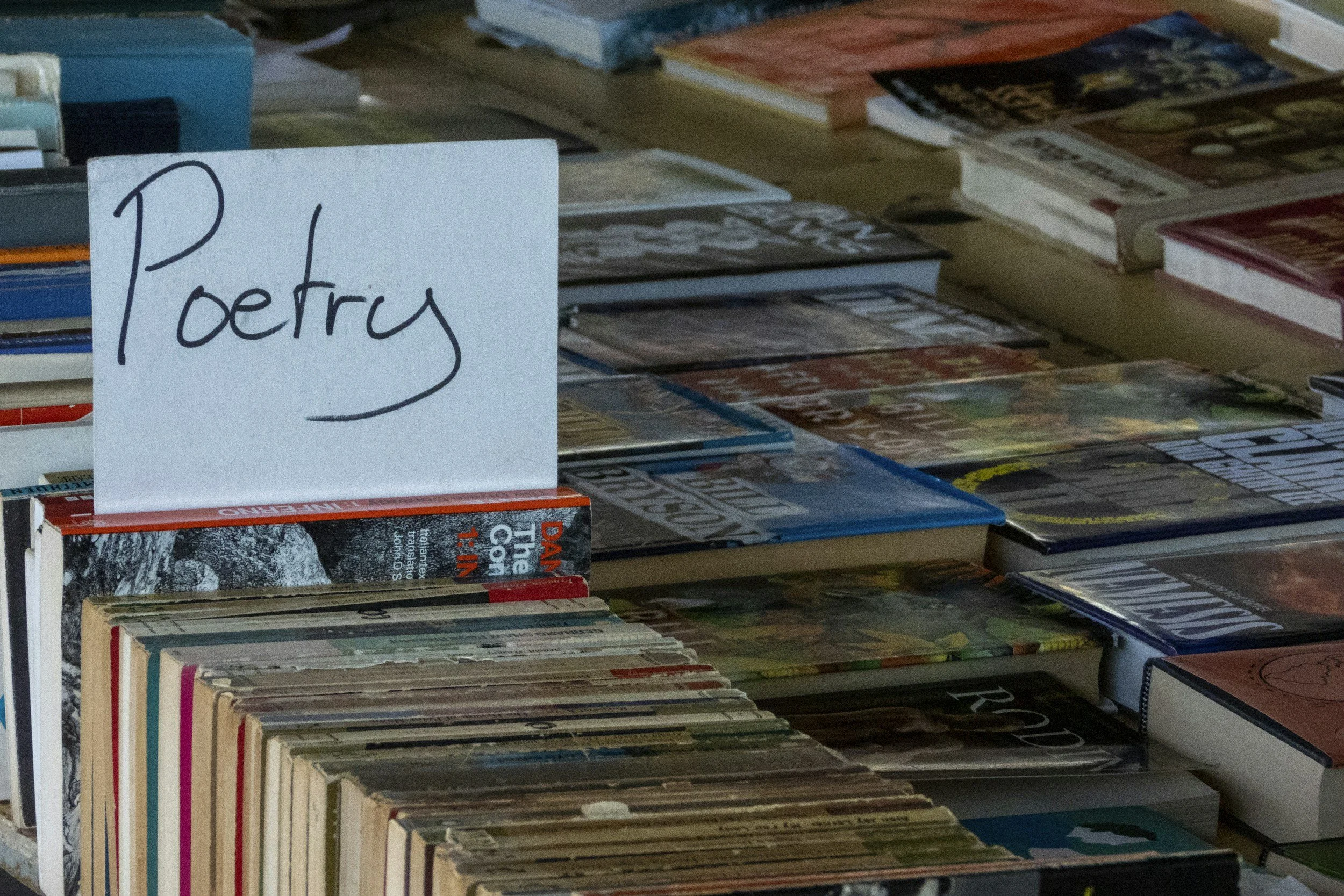
On Learning to Read Poetry Again
If you have spent years at a distance from poetry, the reentry can feel awkward. You may pick up a collection and read three poems and set it down, not quite sure what you received, if anything. This is normal, and the solution is not to try harder.
Mason's method for narration and living books applies here with remarkable grace: read for pleasure, not for mastery. Do not ask yourself what the poem means. Ask yourself what it does. Does a line stay with you, uninvited, while you are folding laundry? Does the sound of a stanza rearrange something subtle in your mood? These are the signs that the poem is working.
The books on this list are chosen for mothers who are beginning, or beginning again. They are, with few exceptions, accessible without being thin. They reward patient reading and they reward quick reading. They are the kinds of books you can open at random and find something worth carrying through your day.
Twenty Books of Poetry for the Reluctant Reader
Sonnets from the Portuguese by Elizabeth Barrett Browning
The Complete Poems of Emily Dickenson
Gladiola Garden by Effie Lee Newsome
The Collected Poems of Langston Hughes
The Lady of the Lake by Sir Walter Scott
New Collected Poems by Wendell Berry
Four Quartets by T.S. Eliot
The Poetry of Gerard Manley Hopkins
The Complete Poems of John Keats
A Sacrifice of Praise: An Anthology of Christian Poetry edited by James H. Trott
North by Seamus Heaney
The Complete Poems of Christina Rossetti
Selected Poems by George Herbert
Selected Poems by William Wordsworth
The Complete Poems of Alfred Lord Tennyson
Selected Poems by Henry Wadsworth Longfellow
The Collected Poems of G.K. Chesterton
When We Were Very Young and Now We Are Six by A.A. Milne
A Child's Garden of Verses by Robert Louis Stevenson
Where the Sidewalk Ends by Shel Silverstein
A Practice for Beginning
Charlotte Mason recommended that poetry be met, when possible, with the mouth as well as the mind. Read a poem aloud. Read it again. Do not explain it to yourself. Let it sit in you for a day, for a week, and notice what it does.
Choose one book from this list. Open it somewhere in the middle. Read one poem. If nothing happens, read another. If you find a line that catches, copy it into your commonplace book and carry it with your day's work for a week.
This is not a performance of literary appreciation. It is what Mason called the living feast: the soul meeting something real and nourishing and allowing itself to be fed.
Further reading: Charlotte Mason's own poetry recommendations can be found scattered throughout the volumes of herHome Education series, particularly in her discussions of atmosphere and of the mother's own formation. The Parents' Review also published numerous articles on reading poetry in the home, many of which are now freely available through the Charlotte Mason Poetry website.