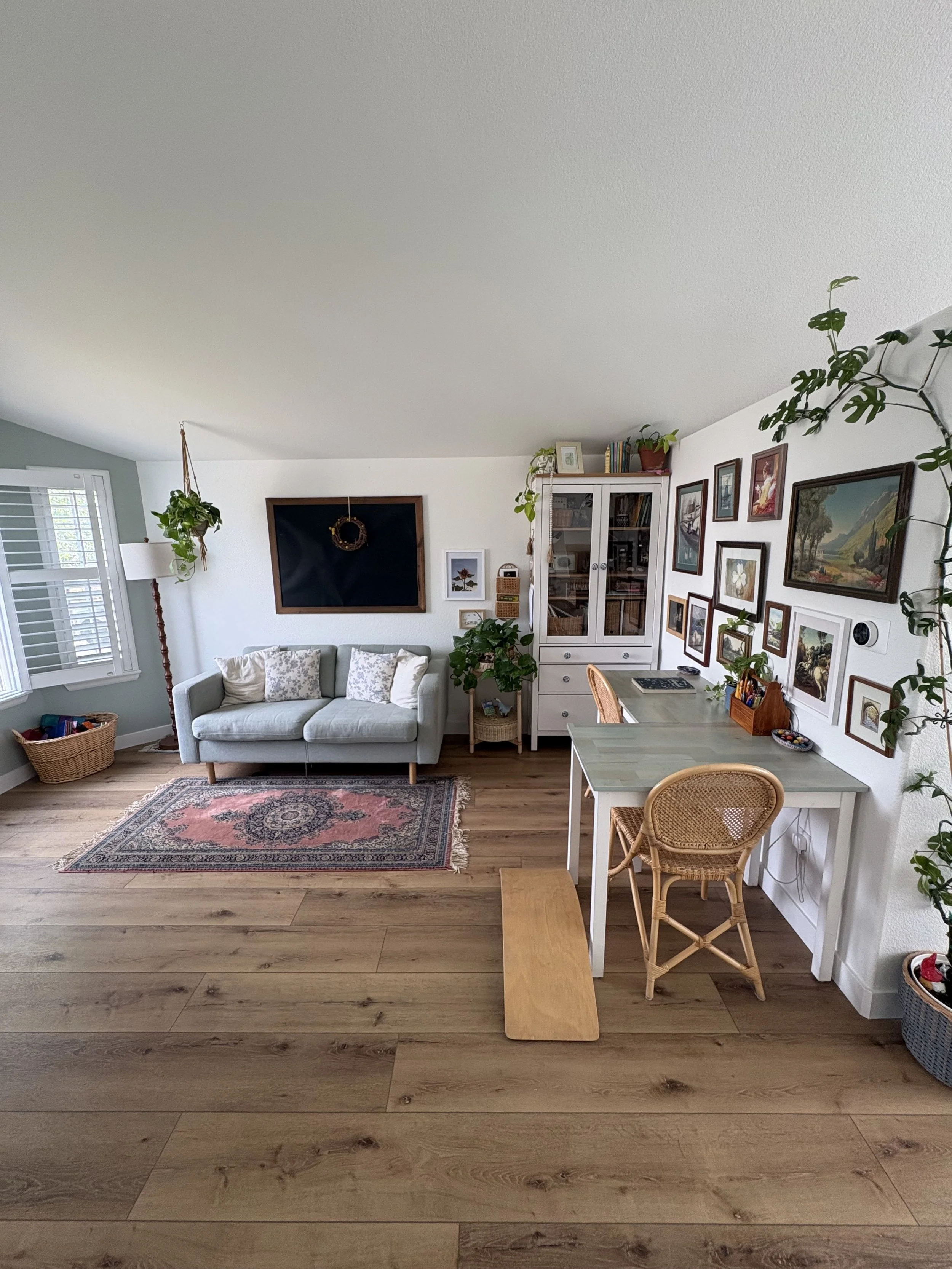
Inside Our Homeschool Room: Light, Living Things, and Very Little Else
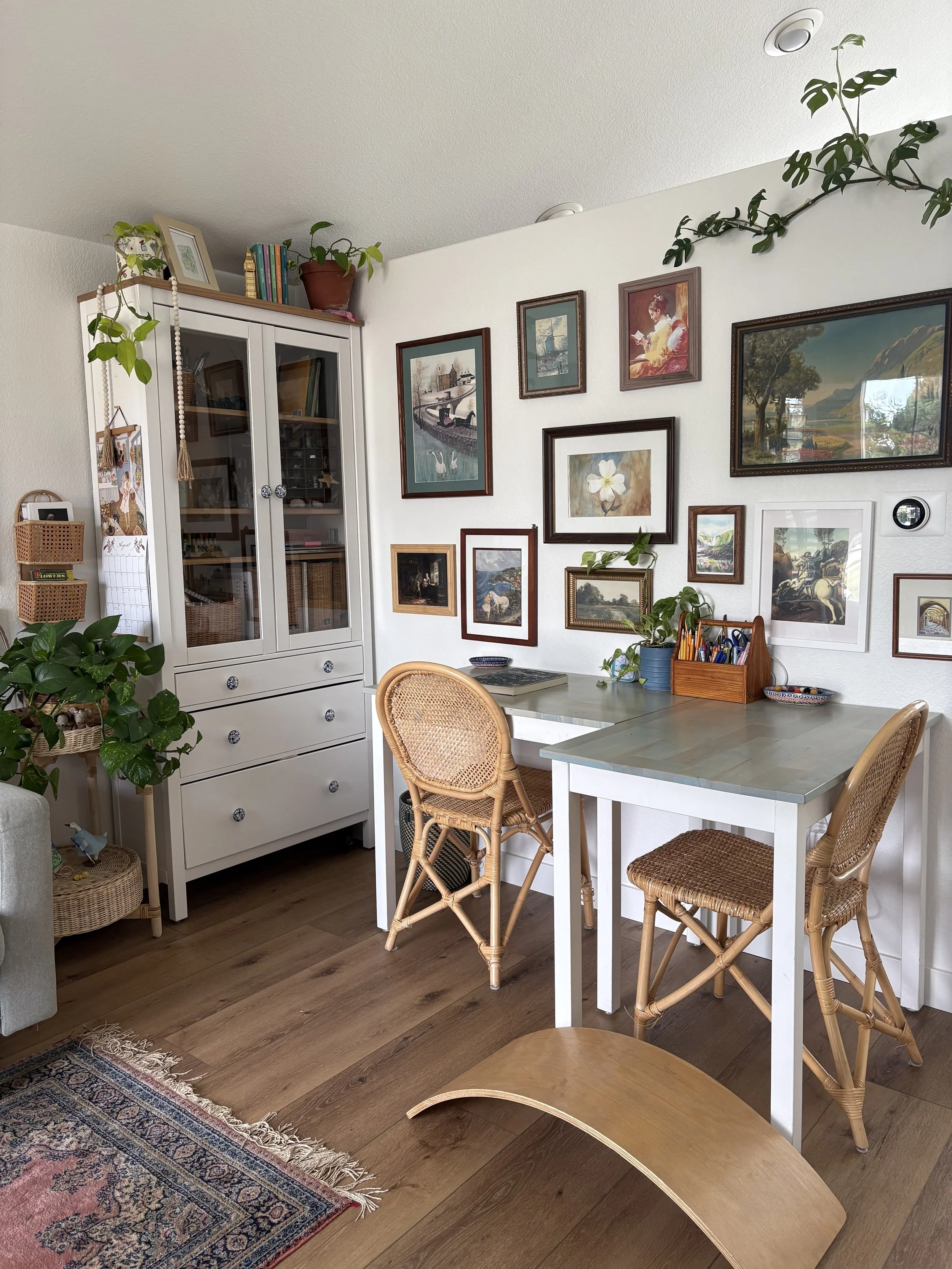
our homeschool tables and curriculum cabinet with our thrifted gallery wall.
Every homeschool room tour I have ever saved to a folder were tidy and cheerful and clearly made with love, but several of them had the same element, the ability to be tucked away. The lights turned off, the door closed. Our home doesn’t exist that way. We have a 90s trip-level that demands every space be useful and intentional. This summer we recently took on a variety of home projects and as I packed away our school room multiple times I began to really evaluate how I wanted this room to be and what I wanted it to communicate. You see, it’s the first room people enter when they come in our home.
Charlotte Mason gave us three instruments of education and placed atmosphere first among them, and she was careful about what she meant by the word. Atmosphere is the ordinary air of a home, the actual conditions a child lives in among real persons and real things. She wanted children to live freely among their proper conditions, and she put the warning: "It stultifies a child to bring down his world to the 'child's' level."With this in mind, I wanted to cultivate a space that feels peaceful, inviting, but also exists in the reality that a third of our home is dedicated to this room.
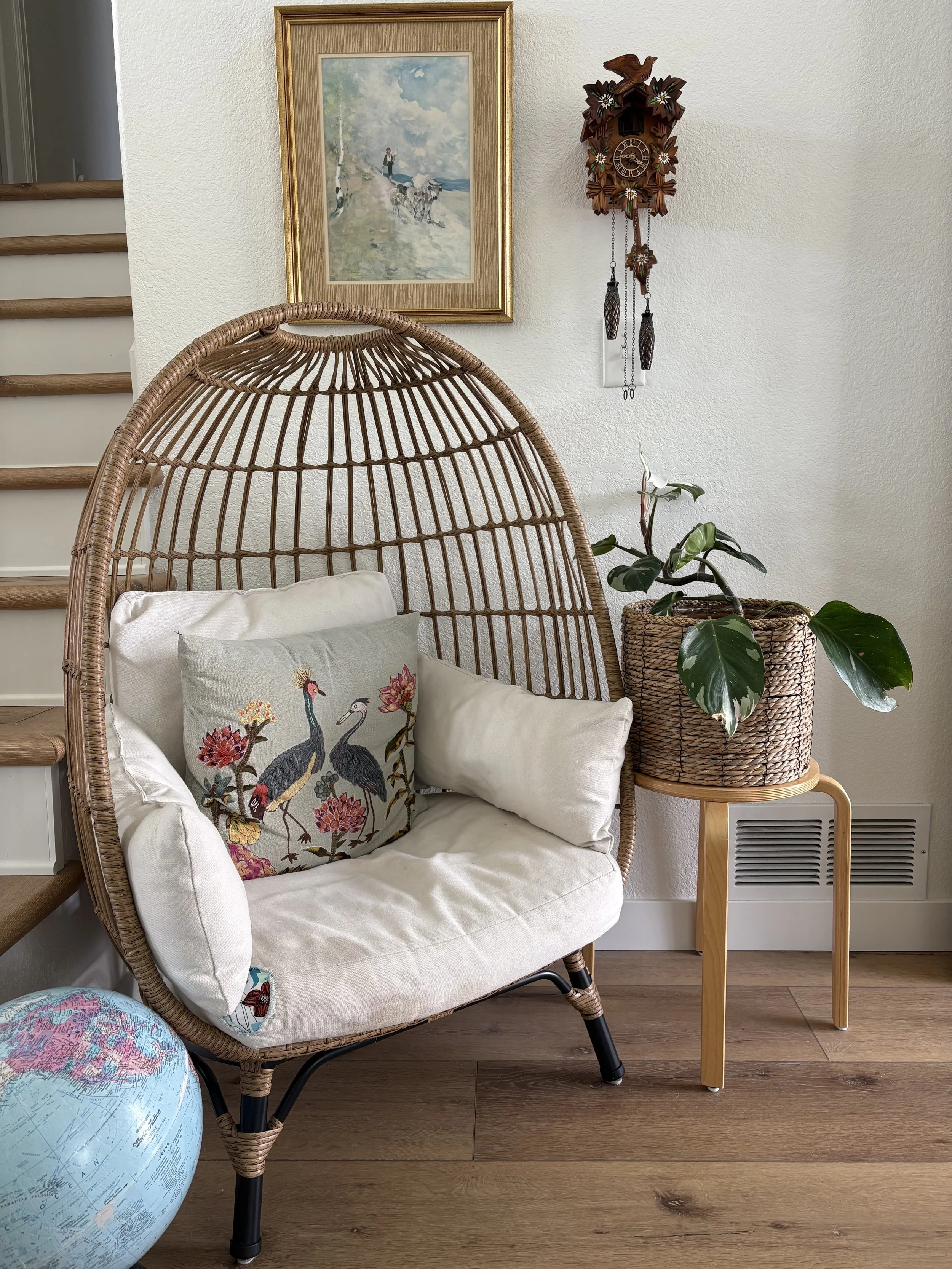
Sometimes a child is in this chair reading, mostly it’s the dog so he can see out into the world
The room is a room in a home first
This space has to work at seven in the evening when the books are closed, toys are scattered, and dinner is being made. It has to work on a Saturday afternoon when no lessons are happening at all, and it has to work when a friend stops by and sits down on the couch with a cup of tea. Every decision in here was made for the household, and the lessons simply moved in alongside all that already lives here.
Once that became the standard, most of my old questions about how the room should look answered themselves. The laminated charts came down because no adult in this house wants to look at a laminated chart in her own living space. The bins went into a cupboard because a wall of plastic containers is a storage solution wearing the costume of a classroom. What remained was a room where grown people read and work and keep things they love, and where children do lessons every morning at nine.
This room is nothing extraordinary or elaborate. The furniture was purchased from Ikea and marketplace, with the exception of our homeschool tables. Those we invested in and had custom made. The plants came from a variety of finds at the grocery store, Home Depot, and the local nursery. There are many a thing here that was found at the thrift store or passed down to me. But the best feature is a great deal of light.
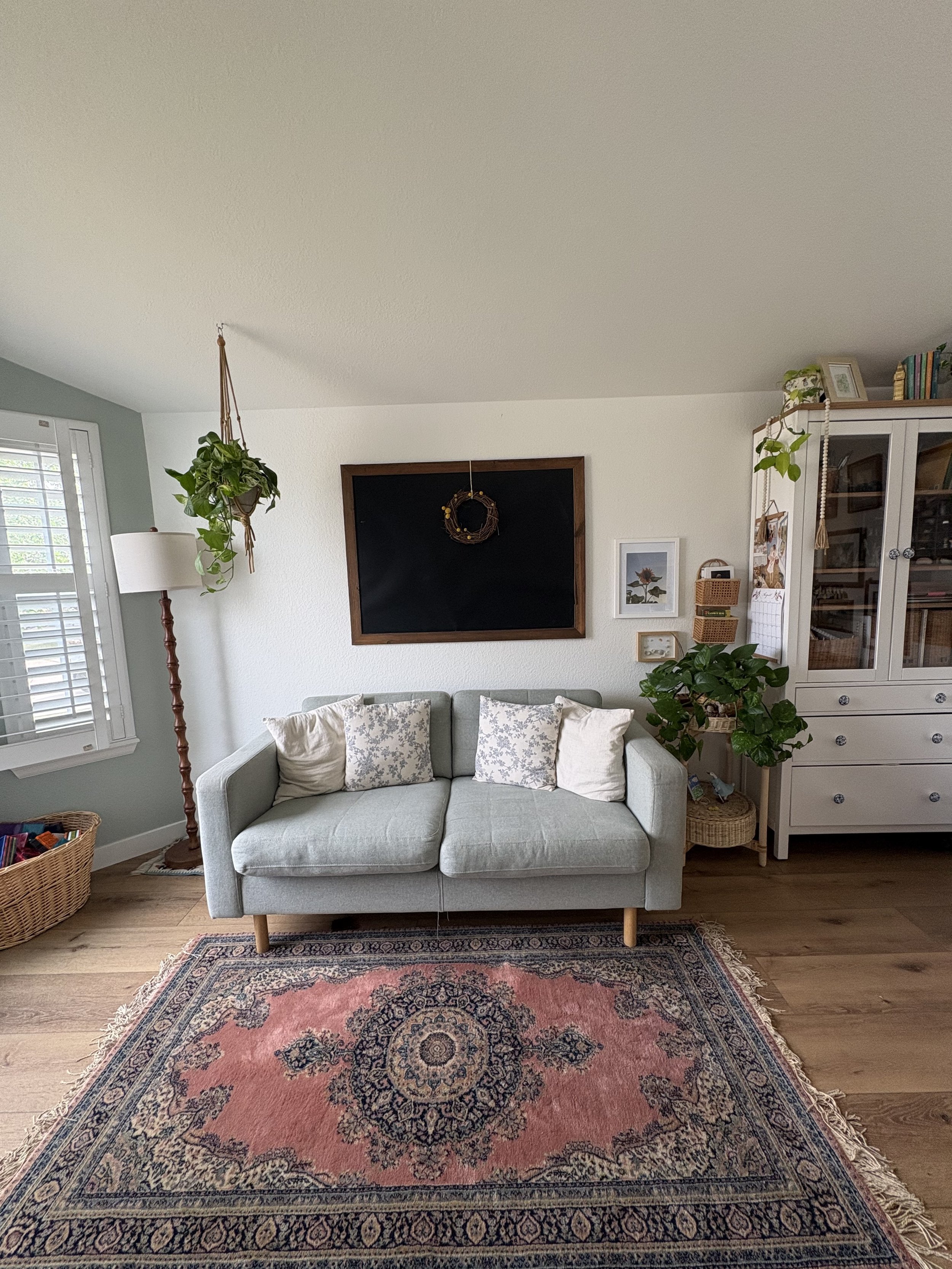
The Turkish rug used to be in mu nursery when I was a baby
Light comes first
I put light at the top of the decorating list because it is free and because it changes how long a morning feels. I’m also a light chaser. A dim room at ten in the morning makes me feel exhausted, and the same hour in a room with the sun in breathes an energy into our home that I need to teach. We actually relocated our homeschool room from the bottom of our trim-level home to the front space because of the light this area gets.
Our table sits where the sun reaches it by mid-morning, and lessons follow that light through the day. Reading happens on the couch by the window while the light is soft, and math and notebooks happen at the table once the sun has come around. Like our Labrador, we kept drifting toward the brightest surface in the room.
If you can do only one thing to your homeschool space this year, move the table to the window. It costs nothing and it does more for the morning than any organizing system I have ever tried.
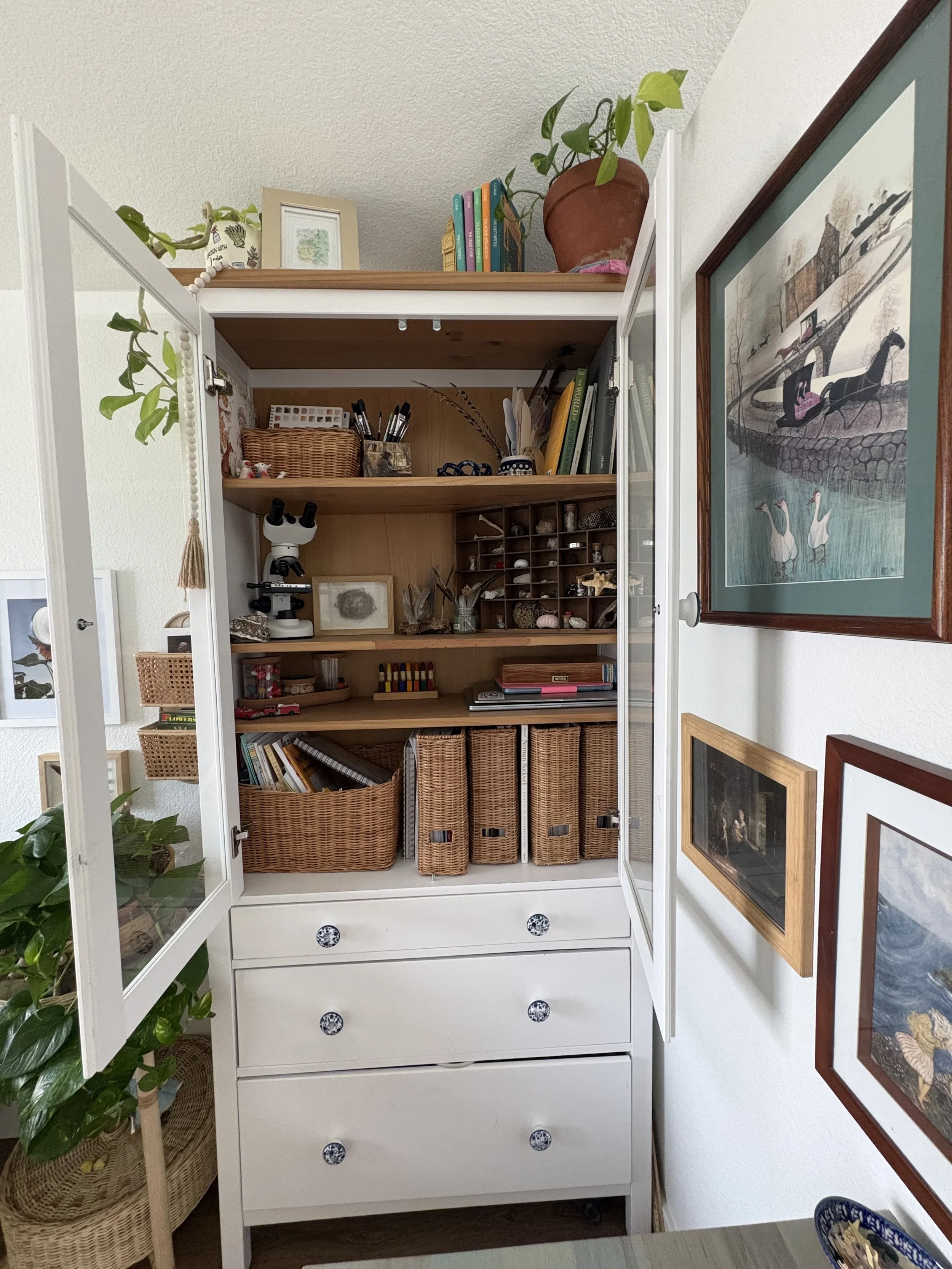
Our curriculum cabinet came from Ikea. It holds the daily work, our nature shelf, and morning time readings as well as art and school supplies in the drawers.
Living things belong near children
The plants are here for the same reason the nature journals are here. Children who live among growing things begin to notice growing things, and the noticing is what helps cultivate the habit of attention. Plants have been my intro to nature study long before I met Charlotte Mason. Several of the plants in our home have special memories attached to them, like the day we finalized our home study.
There is a pothos over the shelf that has grown long enough to loop back on itself, a fern that sulks whenever anyone forgets it. Both children help in the care of the plants. A fern that needs water teaches attention in a way that no worksheet has ever managed, and a plant lost through neglect teaches something too, and without any lecture from me.
The other thing living plants do is make a room feel inhabited. A schoolroom can be spotless and feel like a waiting area. Something green and slightly untidy in the corner tells everyone who walks in that the room is alive and somebody is tending it.
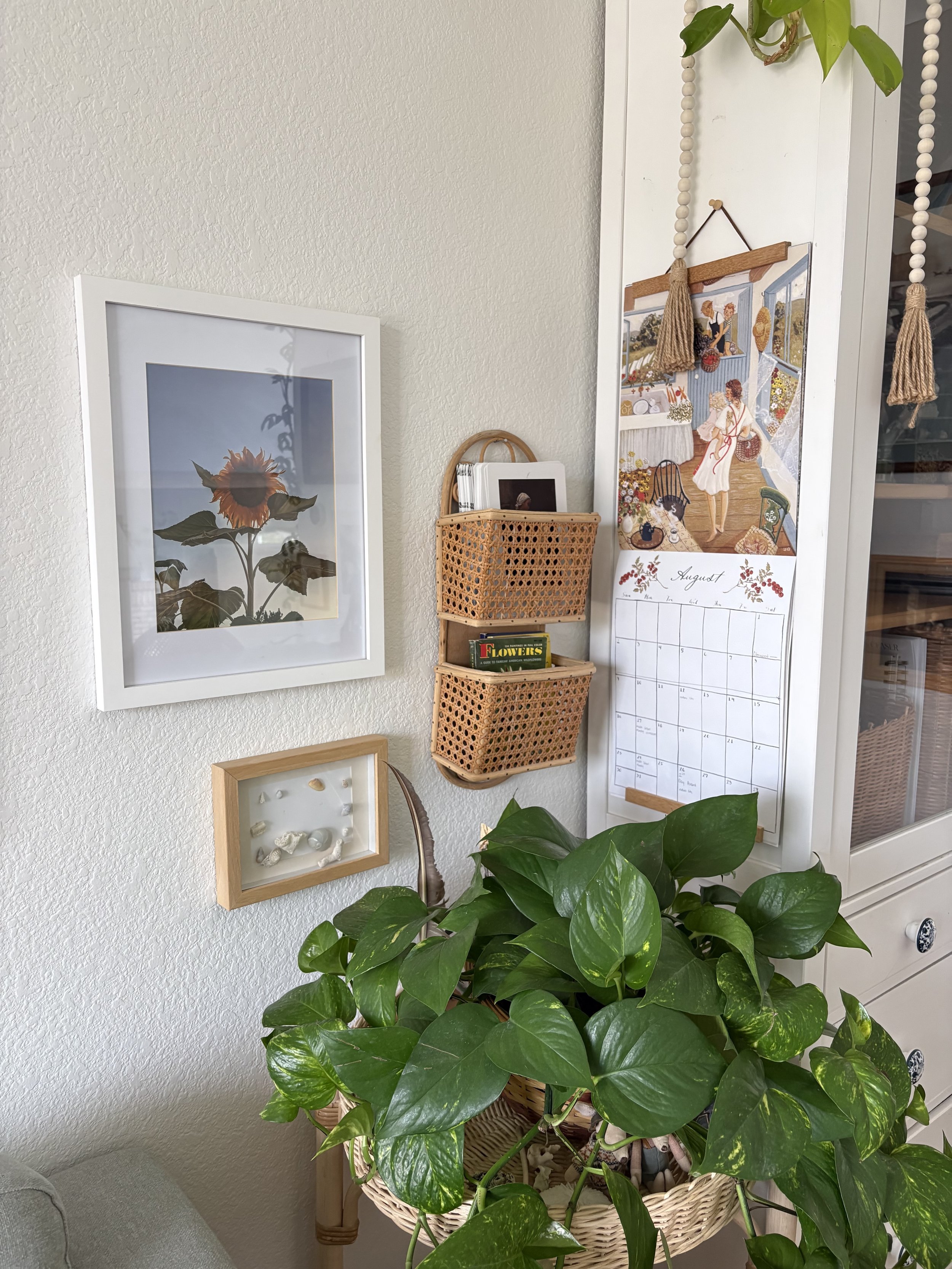
Tucked under these leaves are many nature treasures we’ve collected over the years.
Clear surfaces, which is the part that takes ongoing work
I have to be honest that this is not a decorating preference so much as a survival strategy. Every object in a room asks a mother for something, and most of them are asking for her attention. Multiply that across a room full of supplies and half your mental energy is spent on inventory before a single lesson begins.
So only what earns its place stays in the open, which comes down to the books for this term, the paints, a collection of toys for my son, the maps, and the handicraft basket. Everything else lives somewhere else intentionally. Next term's books are boxed and out of sight, the extra paper is in the cupboard, and the supplies we use three times a year are stored where I have to go and get them on purpose.
The result is that the room resets in about twenty minutes at the end of the day, because there is so little in it to reset. That twenty minutes is the entire reason I keep doing it. A room that resets quickly is a room the children can restore themselves, and a room the children can themselves is one more habit forming without my constant supervision.
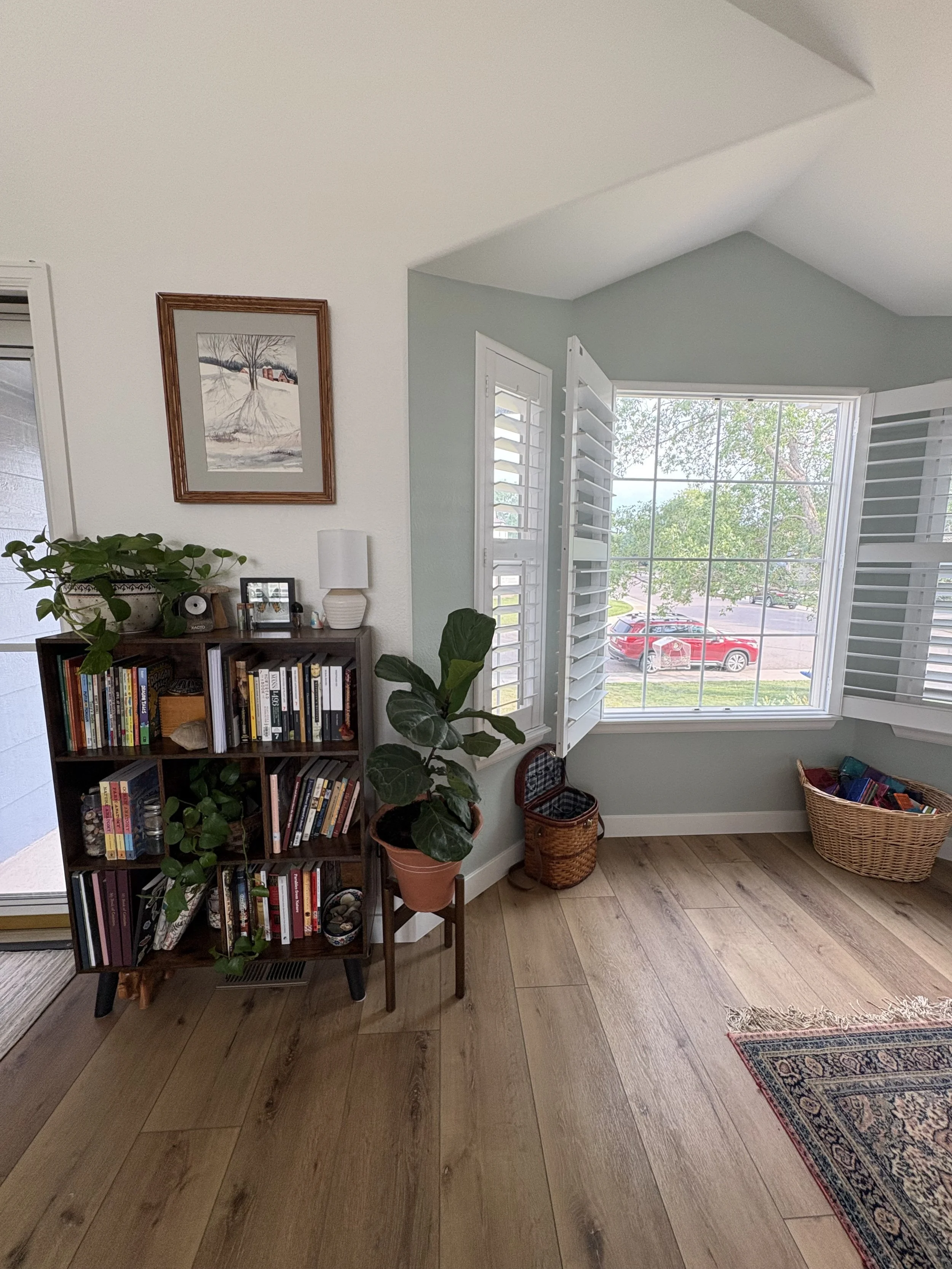
Our current reading shelf filled with the books for the term, my son’s independent reading books, reference manuals, and notebooks. We also have a basket of cars, magnitiles, Mario characters, and building blocks.
What a room cannot do
The room does not make the lessons happen, and it was never meant to. Lessons happen because we sit down at nine and open the book, and there have been plenty of mornings in this beautiful, light-filled room where the sitting down was the hardest thing I did all day.
A room can make the table easy to come to and easy to leave, it puts the day's work within arm's reach, and it holds the beauty and richness of a atmosphere, discipline, and life.
If your own space is nowhere near this, please hear me say that the standard is not a photograph. Of course I cleaned for this blog post and there’s still dog hair sprinkled about, clutter that comes around, and a child who intentionally chooses not to do math in our beautiful room.
A beautifully decorated homeschool room is not the pre-requisite to a beautiful homeschool. But I do appreciate this space.